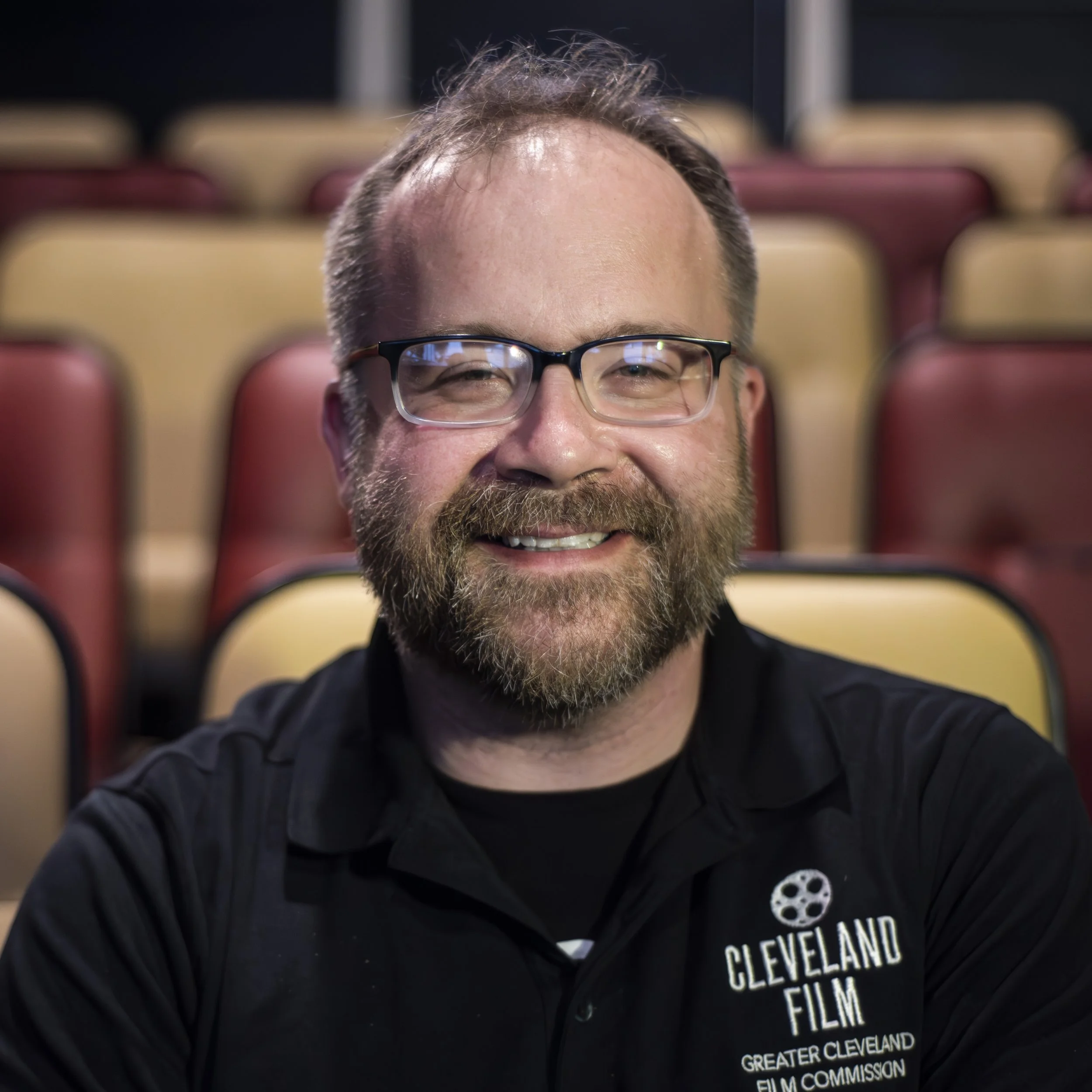
Mike by autumn bland

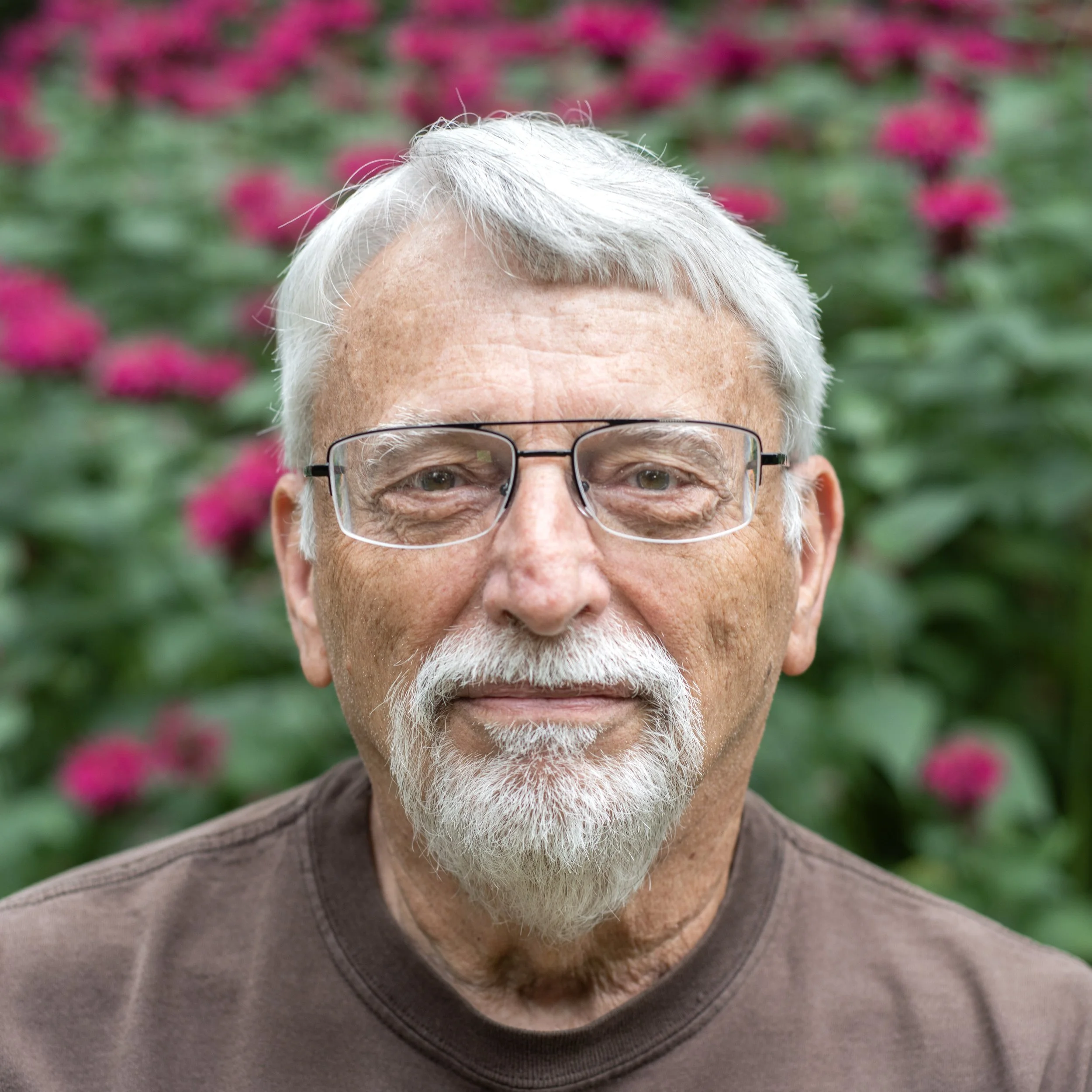
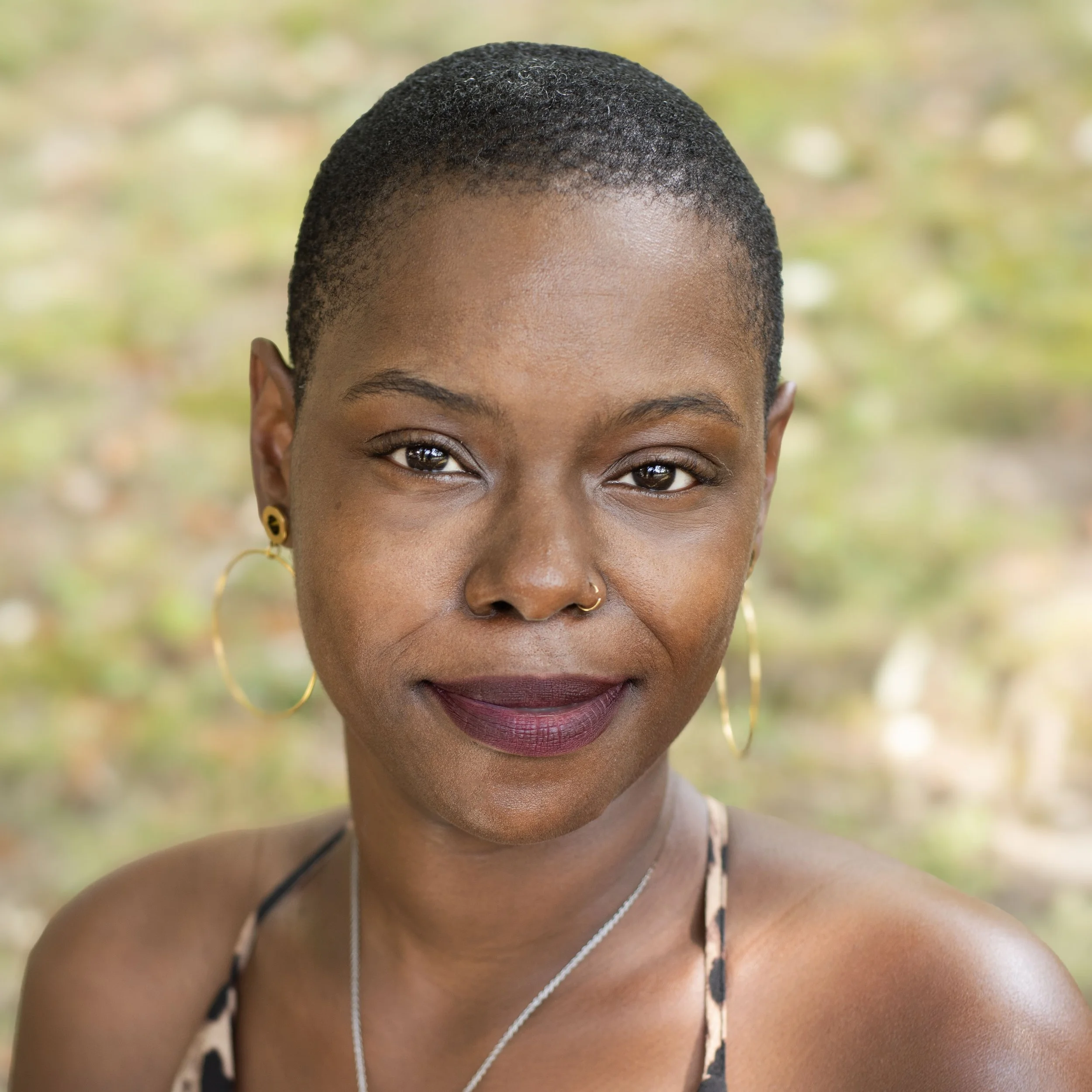
Mike Wendt, Production Coordinator at the Cleveland Film Commission, discussed the impact of the pandemic on the local film industry. His portrait was captured as part of a small sub-series of the Stay at Home collection which featured people in the film industry. During that time, film productions came to a halt, there were threats of multiple union strikes and the Cleveland Film Festival had just announced their online platform. 

As a seasonal employee for the Cleveland Film Festival since 2008, Mike shared insight about the changes the festival underwent since 2020. “This festival was one of the first festivals to pivot to an all-online platform in 2020. It went back to in-person in 2022, but the venue changed from Tower City to Playhouse Square. The core audience numbers have been lower ever since. 

In the spring of 2020, film productions were at an all-time low in Northeast Ohio. “There was a movie that never got back off the ground called “Under Cover”. It was a script specifically written for Cleveland. It went away because of the shutdown. There had been an  exodus of productions going to Europe because they seemed to have a better handle on the pandemic,” Mike said. 

“The WGA and SAG strikes were a huge hit to the industry as well. The strikes lasted about 6 months, but the ripple effects lasted a year. In some ways it feels like we are still affected. Original ideas are scrutinized. There are so many more prequels and sequels, but not original IP.”

Mike noticed that more people seemed to be inspired on the local stage and started writing and making their own material. “There’s never been a downturn in people wanting to make their own stuff, but I think the pandemic was a point where people realized “what’s stopping me?” Late 2020 I got a call about the movie White Noise. That was a big boon, just to get people used to going back to work. I was able to step away from my desk and be on set, which I love. I’m hoping that Hollywood will start to embrace original ideas again, like they did in the 70s, 80s and 90s.”

From a personal perspective, Mike had some life changes. A wedding planned in May of 2020 had to make adjustments to meet Covid protocols. Mike and his wife lived in three different cities during the pandemic (Berea, Cuyahoga Falls, and South Euclid). Mike’s father passed away unexpectedly during that time, which brought grief and camaraderie within his family. “Not that my family wasn’t close before, but working through the passing of my father made us closer.

Looking back, five years ago feels like twenty in some ways. There are certain aspects of my life that have improved because of the pandemic. It helped me refocus and embrace more time with family and friends. Quite a few things I’m working on are going to be filming in a few months and into next year. Work is important, but it's important to take time for myself, for the sake of mental health. This year has been a really positive year. Finally all the things are coming to fruition.”
July 2020

Merriman Hills

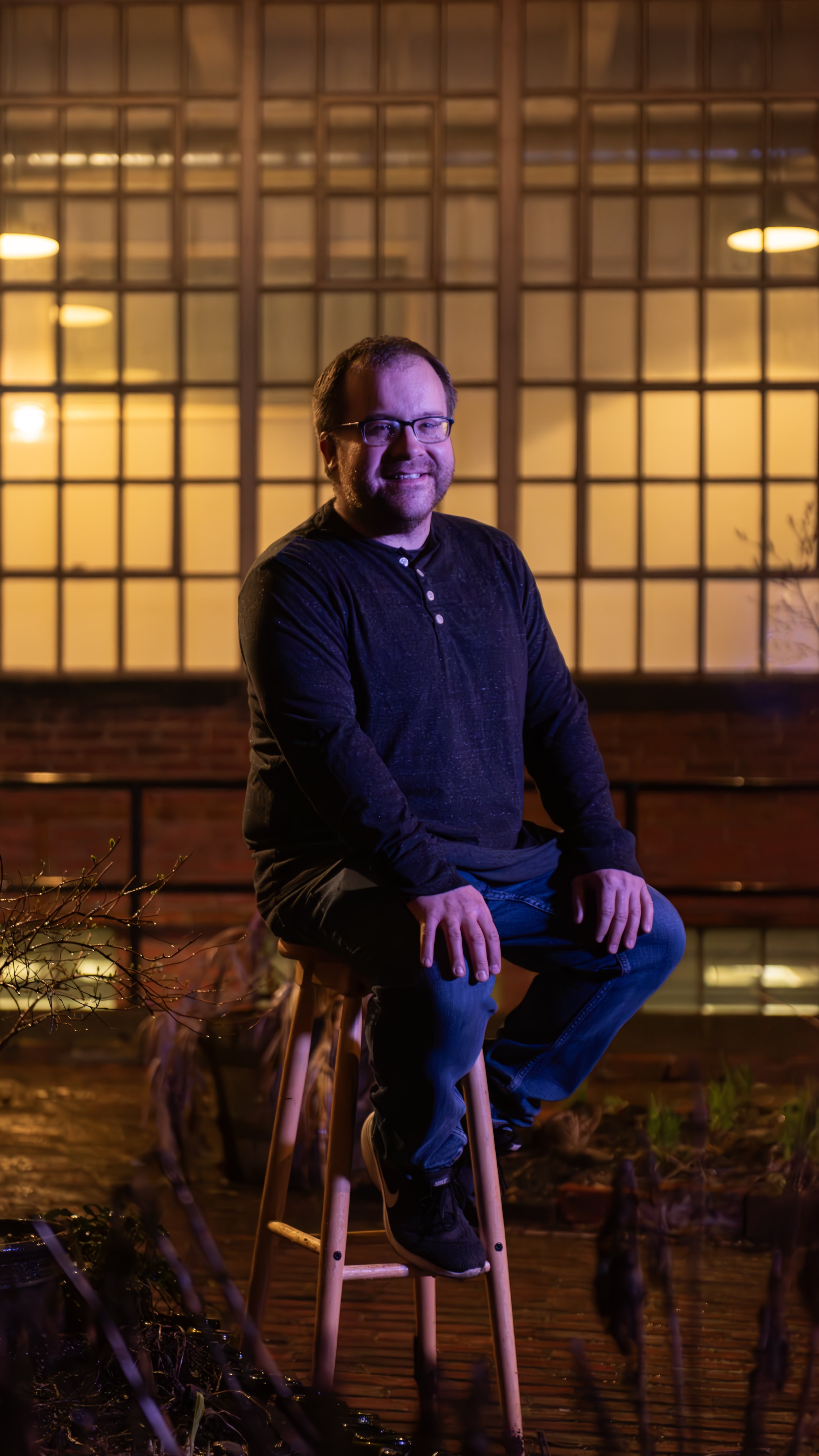
Mateo by autumn bland

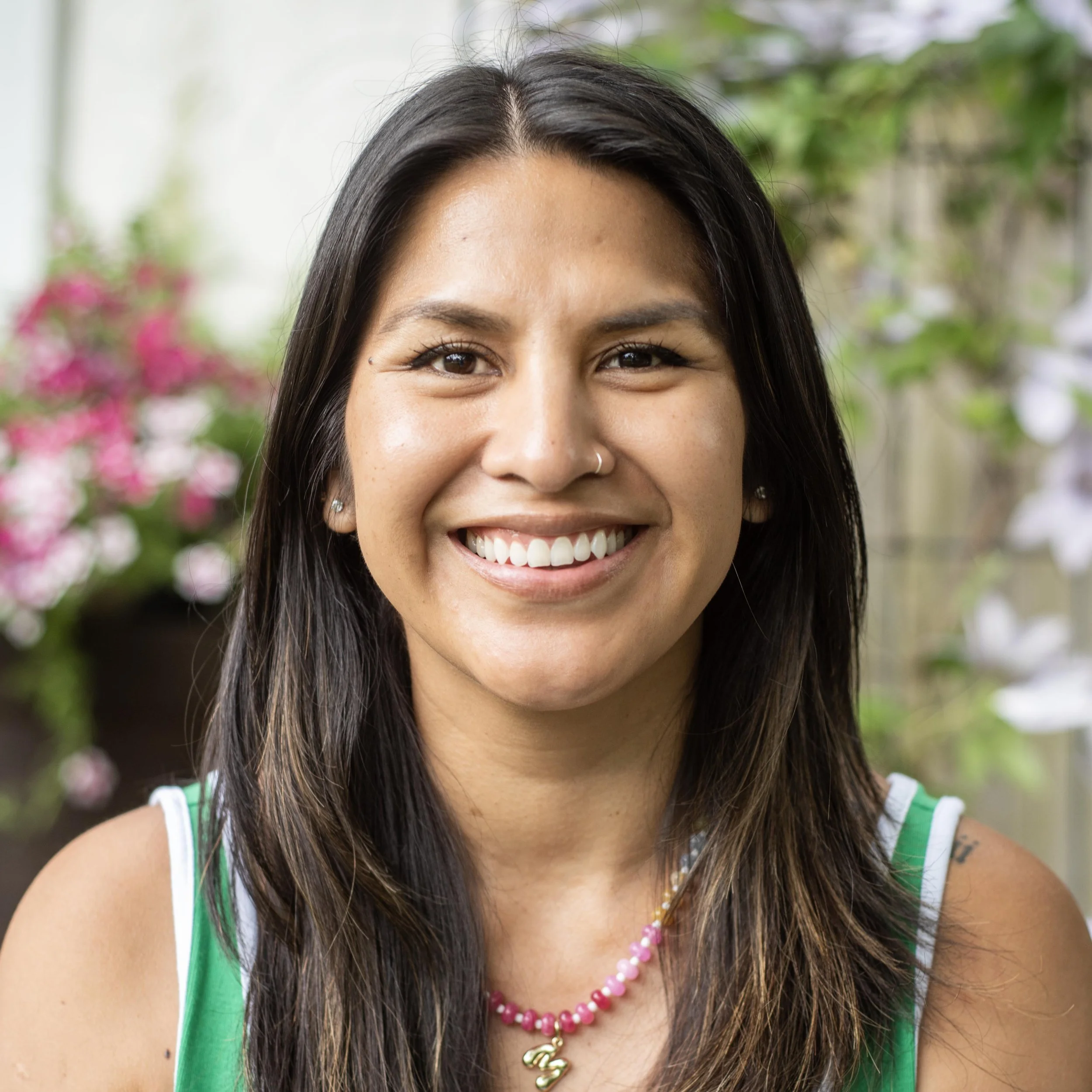
Mateo was first photographed in July of 2020 as part of the Pride series. He has experienced many changes since that portrait was captured—Mateo reflected on his journey to transition while navigating being newly diagnosed with Type 1 diabetes.

“I don't know any other Type 1 diabetics that are also trans,” Mateo said. “I'm sure they exist, but I've never met anybody. I was in a very specific situation where I needed to find a doctor that was willing to deal with all of this. I went to the Akron Pride Clinic. They were super understanding and helpful. There was a bit of figuring out how much T I should take. My doctor walked me through the steps of what to expect. It was a lot of hormones, insulin is also a hormone. My body was rapidly changing. I had lost a lot of weight because I had undiagnosed diabetes. Testosterone can make you gain muscle mass, so I was gaining my regular weight back and also gaining muscle mass. I kind of blew up for a second there, which is completely fine, but it was just a lot.”

During the majority of the pandemic and his transition, Mateo was a public facing service worker at 3 restaurants. He said that due to needing to wear a mask and having a deeper voice from the testosterone, he felt more confident at work. Family interactions, however, were challenging. 

“Because it was the pandemic, I wasn’t seeing my family often,” he said. I would go months without seeing my mom and then when I would see her she would say things like, “You look completely different.” That was kind of hard for me. I’m a momma’s boy, I’ll always be a momma’s boy. I would never not talk to her. My family could be more supportive. They’re not actively telling me to stop what I’m doing, but they’re also not acknowledging my transition.” Mateo expressed further that his family often dead names him and rarely use his preferred pronouns.

Being in a long term relationship during a transition was helpful for Mateo. His then partner, Hannah, was Mateo’s support system in the early stages of testosterone therapy. “She helped me understand who I was in ways that I couldn’t verbalize. I appreciated her being there during that time. I don’t know what the timeline of events would have been if she wasn’t there to encourage me, especially considering the way my family is. There are certain friends that voiced similar things as my family that gave me pushback when I was a teenager. I didn’t have the proper language for things back then. Teens now have the language to understand all of this.”

In 2024 Mateo started a job as a traveling chef for a large company which allows him to travel out of town, interacting with the public. “I have my own chef’s coat that says Mateo on it. People call me “sir”, its really cool,” he said. “I also have a lot more job security, which is nice. I’ve been doing more freelance cooking for people and I’m looking into getting my LLC.”

“I wouldn’t say there is some sort of an end goal as far as transitioning goes, but looking back to where I was four years ago and where I am now, I’m so much happier. It wasn’t all smooth sailing. There were many ups and downs. I appreciate my past for what it was, but I’m happy to be where I am now. Everything that I’ve had to go through, I would do it eight times over again if it meant that I could be here today.”

Emily by autumn bland

The first portrait I captured of Emily was during the Stay at Home order. She was working as an RN at an Emergency Department and was 8 months pregnant with her second child.

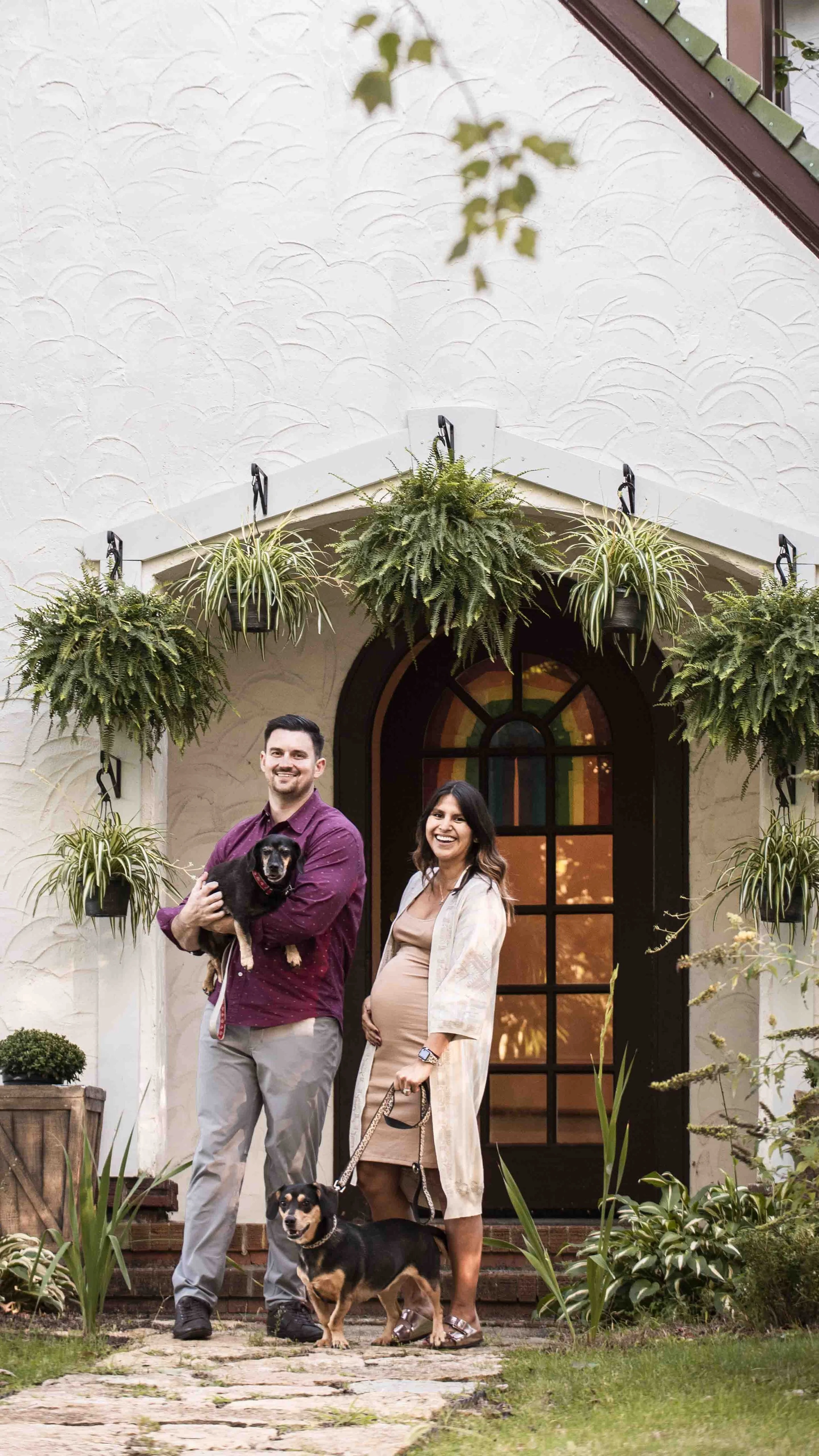
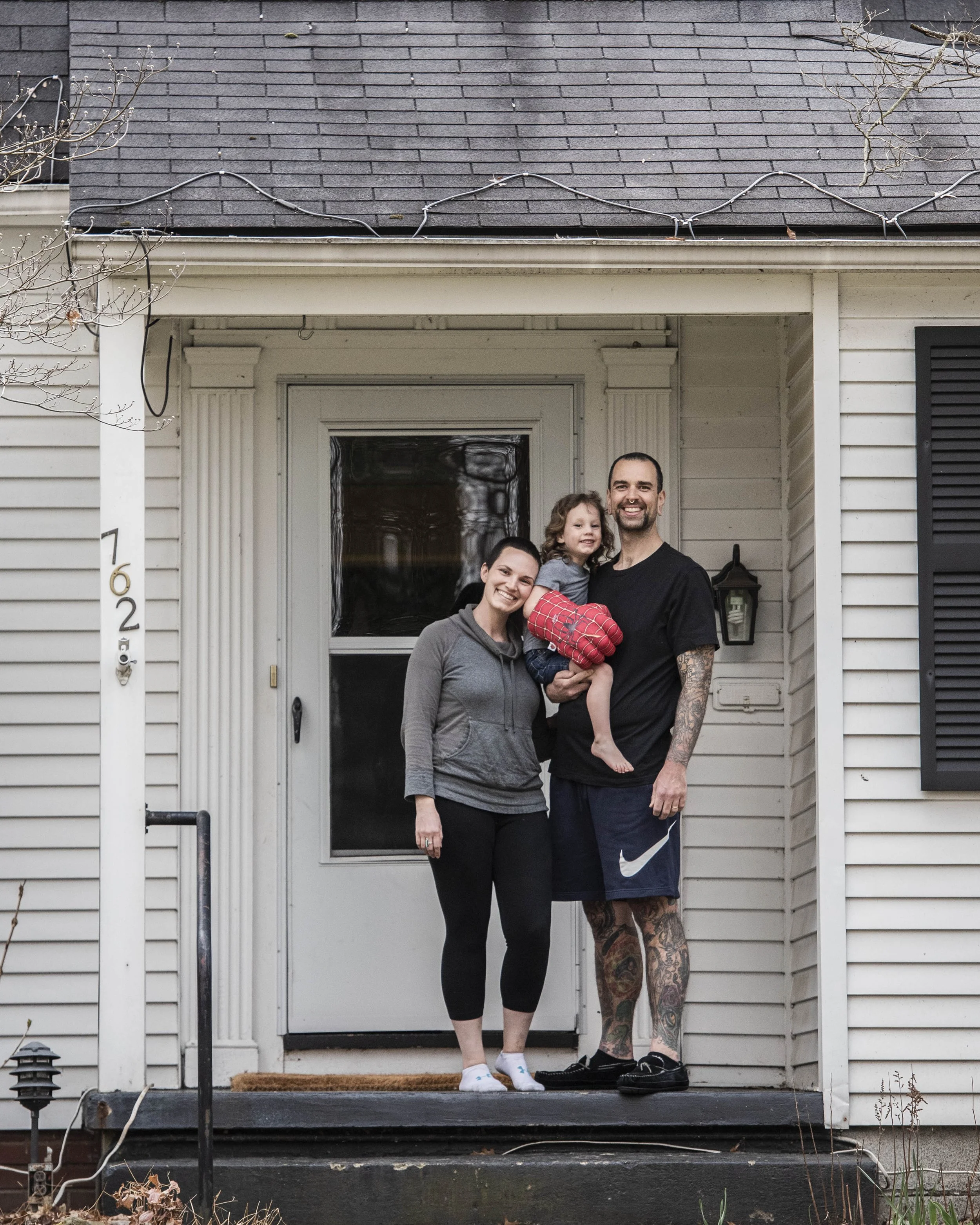
The first portrait I captured of Emily was during the Stay at Home order. She was working as an RN and was 8 months pregnant with her second child. One month after that portrait, I photographed her at home with her husband, Zack, their son, Leo, and their newborn daughter, Charlie. Emily gave birth to their third child, Ellie, in January of 2022. At that time she was working in an emergency department but changed jobs upon returning from maternity leave.

“Each pregnancy has been very different,” Emily said. “With Charlie, I was so scared coming to work–for my safety and her safety. There were too many unknowns and being in the ER was extremely stressful. But, since people were afraid to come to the hospital, we weren’t very busy, which made things a little more manageable. 

The third time around I felt more comfortable for my safety. We had learned a lot about COVID, and I was vaccinated and had a booster. However, the ER and hospitals in general were at maximum capacity. A new level of stress was rising because even our ICUs were full. I’ve never seen that happen before. It was exhausting.” 

Emily shared that the pandemic was the most difficult and overwhelming chapter of her nursing career to date. She pressed on and was able to make a job change after maternity leave.

“Leaving the ER was something I felt was very necessary. Between the chaos of COVID and work, I was bringing stress home with me daily. It was a cycle I couldn’t continue. I was unsure at first but it was necessary,” she said. “Now I work part time in an outpatient OBGYN office. I still get to be with patients but it's a lot less stressful. My work schedule allows me to be at home more often, which is where I want to be. 

I feel like my family needs me, my mental health is much better and I can be more present at home. Leo is six, Charlie is five and Ellie is three. Zack’s work has been steady and he has always been so supportive of whatever I need and whatever is best for the family. We are still in the same house and are enjoying our life here. We have ducks, chickens, goats, sheep, and ponds. We love being outside and we love being at home.

When I think back, I don’t regret anything. I love the experience I got to live. If COVID never happened, would I still be working in the Emergency Room? Maybe. It made me think that everything is for a greater purpose. Where I’m at now is the most stable I’ve ever been in my life. I did the best I could and now I’m where I’m supposed to be.

It makes me feel like this wasn’t all for nothing.”

March, 2020

May, 2020

Amanda & Erin by autumn bland

Amanda

Erin

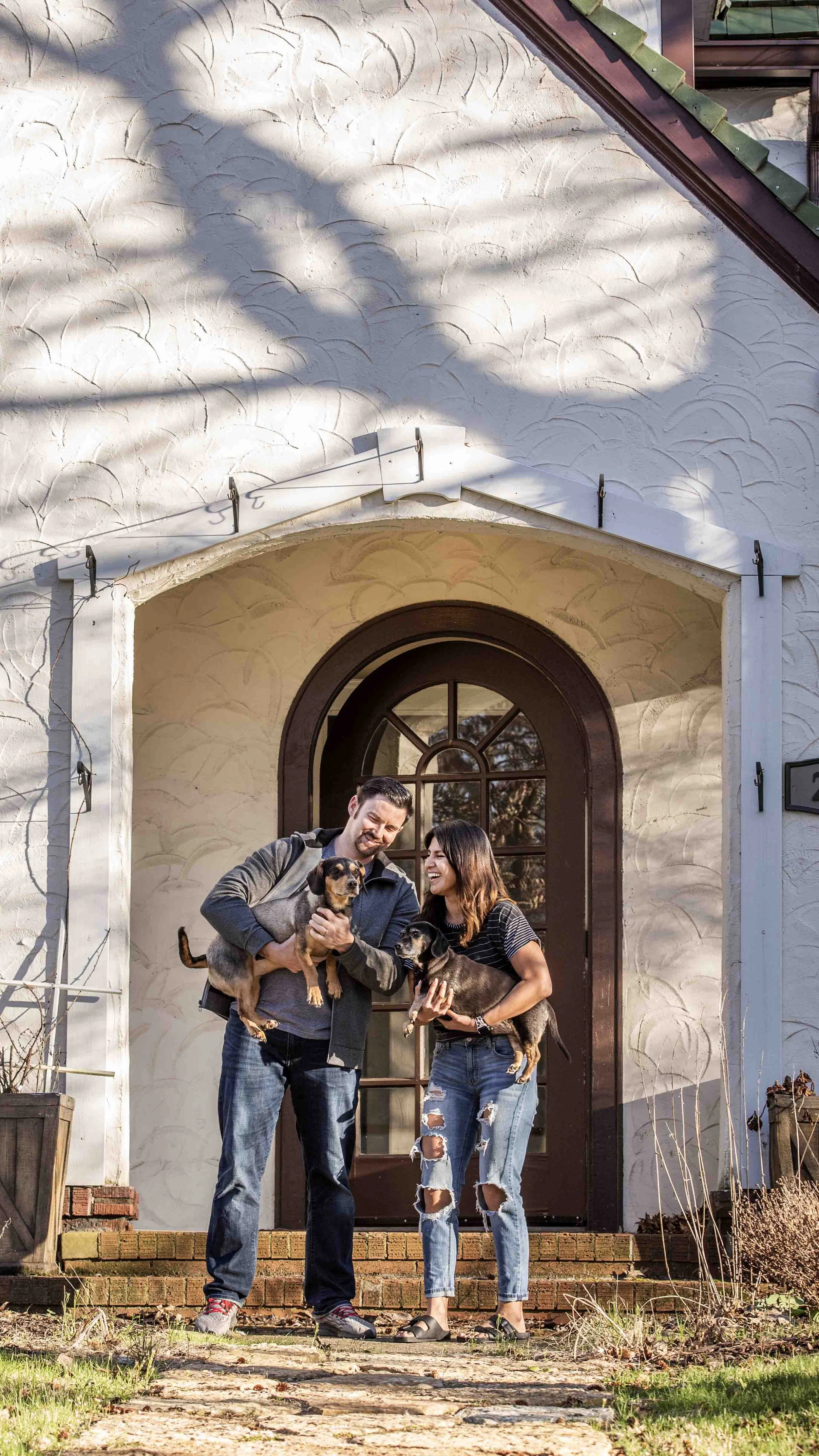
Amanda and Erin were first photographed in the summer of 2020. “In that photograph, it was just us and our dogs, which was not reflective of what our life typically looked like,” said Amanda. “Our son Austin had left to live with his dad and Erin’s dad Larry was in the hospital, then rehab, recovering from a stroke. I think of when you took our photo, we had a lot of love and we were very happy, but we were so alone in a way that we hadn't been alone. Everybody that we were responsible for was out of reach. 

“Austin was having some trouble in school, but was college bound. Then the pandemic hit and it just undid everything,” Amanda said. “He stayed with his dad for spring break and then sent us a message saying, “since school is gonna be virtual, I'm not coming back.” He struggled with substance abuse, ultimately having a near fatal fentanyl overdose in December 2020. He went to rehab and was the youngest person there.”

Erin’s dad, Larry, came home in September of 2020 and they were able to continue their intergenerational lifestyle. Additionally, Erin and Amanda took in their three grandchildren after their daughter continued to struggle with her mental health and was exasperated by the pandemic.

“We had to tighten down and make sure not to get people sick. Lots of health and safety to keep in mind with Erin’s dad’s health and having three children in the house.”

Erin and Amanda were working full-time remotely through the majority of 2020 + 2021. Erin changed jobs when her employers were requiring people to come back into the office. “There was a huge push for everyone to come back in the office, which was counter-intuitive considering the next wave of COVID was happening,” Erin said. “It was too risky for my dad’s health, so I went back to consulting while taking care of my dad and I started job hunting. He was always so supportive and would ask how the search was going. The day I got the call that I landed my new job, I was able to tell him. He was so happy for me. That same day, he passed away from complications from his stroke. It meant a lot that I got to share the good news with him before he passed.”

Amanda worked as the Executive Director of Plexus LGBT & Allied Chamber of Commerce for one year when the shut down went into effect. “It changed the entire concept of what our organization was, but it was the best thing that probably could've happened. We always said that we are more than a networking group, but that was all that we really did, and then all of a sudden we couldn't network. We stepped into the space that we knew that we were in around diversity, equity, inclusion, and belonging training.”

When asked about the impact the pandemic had on the LGBTQ+ community, Amanda and Erin replied, “Some impact that we know happened was increased isolation, how hard that was, and how it might've prolonged folks coming out, especially younger ones. How it might've kept trans people from being able to access the care that they needed, especially to make their social transition. One thing that became prescient during that time was basically living through a plague. The HIV activists and those continuing to live positively with HIV had the recognition that within the queer community and queer spaces we have many immunocompromised.”

Life throughout 2020-2024 was eventful and scary, but full of love for Erin and Amanda. Their son Austin lives close to them and continues to work hard on his sobriety. All three of their daughters’ children continued to live with them and are thriving. Though Erin’s father passed in 2022, his memory is very much alive. Both women are still working and have started to enjoy a more social calendar since 2023.

“I think society is forever changed,” Amanda said. “There are moments of great intensity where you do not know if you’re going to make it through. Larry, through the stroke, losing him. Austin in rehab. Not knowing where our daughter was. Those were all really intense times. Everything was heightened because of the national tragedy we were all a part of. You really don’t think you’re going to make it through and then you do. I think one of the quotes that always stays with me is: “If you’re going through hell, keep going.” You don’t know what’s on the other side, but you come through one way or another.”

Helen by autumn bland

At 100 years old, Helen is the eldest participant in Portraits of a Pandemic. Over the past decade, she has lived with her 84-year-old son and his multi-generational family in their Austintown home. Helen’s lifestyle did not change throughout the course of the pandemic; She had a few small bouts of illness, but overall managed to stay unfazed. It could be argued that, by not having a strong understanding of the virus, she was able to avoid it. When asked about her memory of the Covid-19 pandemic, she said: “I think I didn’t get sick because my family was too ambitious. They didn’t have time to catch a germ.”

April, 2020

Austintown

Al & Terry by autumn bland

Al

Terry

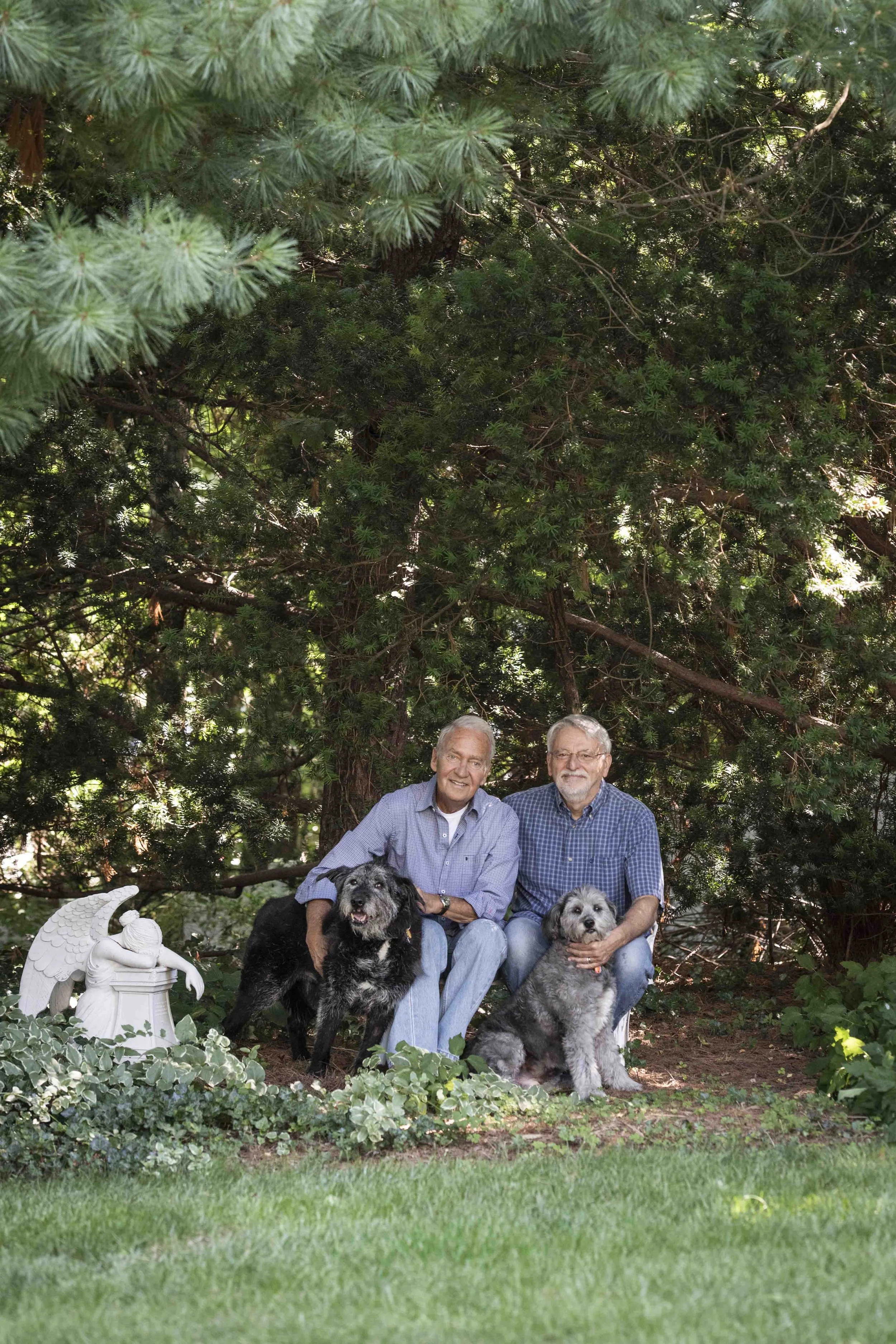
Al and Terry were photographed in the summer of 2020 with their dogs in their backyard. “That portrait was bittersweet because that was the day we had to put our dog Maynard down. We cherish that photo,” said Terry. Al and Terry have been together for 31 years and both retired before the pandemic. When I asked about their experience during the pandemic, they said: “We were basically stuck in the house, yet it wasn't a negative experience. We just sort of rediscovered each other and we enjoyed each other's company, so we didn't feel at a loss. It just confirmed the bond we have as husbands and as friends.”

A couple of years ago, Terry was diagnosed with stage four bladder cancer and has responded very well to the treatment.  Al has been diagnosed with a heart condition, called cardiac amyloidosis and is part of a trial study at the Cleveland Clinic. “He goes once a month for an infusion of a drug, which just got approved by the FDA and is very expensive ($405,000 per injection). Of course, insurance companies are fighting this expensive treatment, so most patients can't get the benefit. We just deal with it right now. We’re trying to support each other and we're both doing okay. We still go day by day, but we haven't cut back much on activities or anything,” Terry said.

Al and Terry volunteer for a group called Stage4, a ministry of St. Luke’s Anglican Church which provides comfort bags for cancer patients in the Akron and Medina areas. “The bags are filled with things a patient could use, especially during treatment,” Terry said. “Blankets, a journal, water bottle, puzzle books, stress balls for neuropathy, and more. We write a little note that goes in each bag.” 

With volunteer work being a passion for Al and Terry, they are still continuing their work with other organizations. Terry has been volunteering at Goodwill. Al reads to the blind and is part of the a ukulele quartet. “We have a ukulele, harmonica, and bass guitar and sing. We perform at independent living, assisted living and memory care units. It's such a good feeling performing for these people.” Al said.

Al and Terry shared a few closing thoughts about the past four years for them. “For us, a sad part of the pandemic was that a lot of our favorite places never came back to their full selves. Something as simple as our little Chinese restaurant is now strictly takeout. The pandemic destroyed a lot of small businesses. We try to support the little guys, but many didn’t survive. On the other hand, we did (and still do) enjoy just sitting outside at home. It’s very peaceful and relaxing in the nice weather and we love our home.”

Bonnie by autumn bland

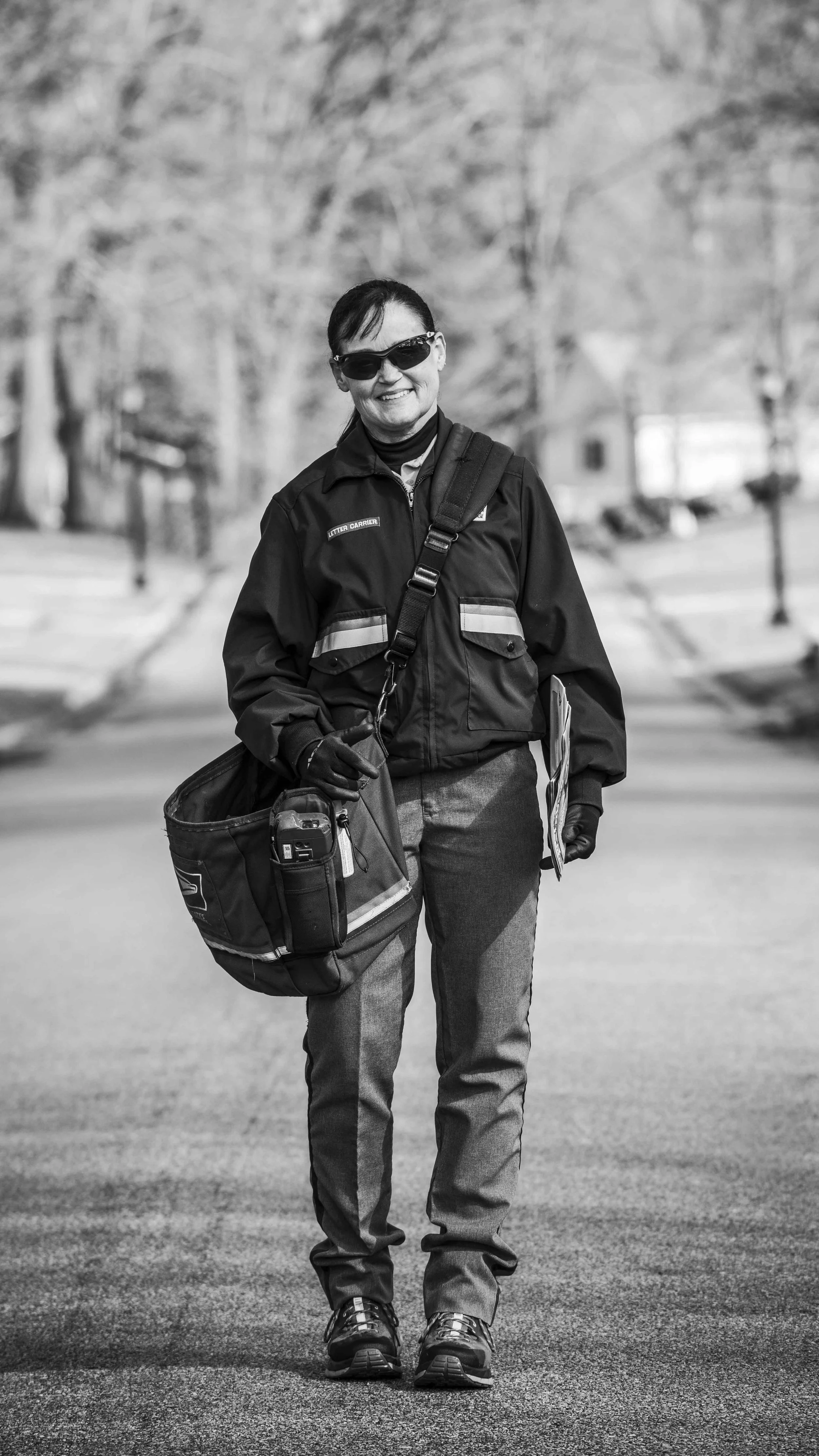
Bonnie was among the first of the Essential portraits documented during the Stay at Home order. As a letter carrier for USPS for nearly 30 years, Bonnie was grateful to continue doing her job without too many changes. “I was thankful to still be working so I could be out in the fresh air,” Bonnie said. “But it was like a ghost town—Businesses were shut down, everybody was home. They mandated masks in the office, some people were getting sick and we got a bit short staffed. I never got sick, and I think not being in an enclosed space helped a lot.”

Early in the summer of 2020, Bonnie was attacked by a dog while on her route. “This dog was in an open garage on a leash, but managed to get out and came charging at me. I carry some of my mail in my arm, against my chest. That’s where I got attacked—he jumped on my chest and bit my hand. You cant stitch a dog bite and it took forever to heal because the bite was so deep,” she said. Bonnie was out of work for two months—she used sick time but never applied for workers’ compensation. During her time recovering, her youngest daughter was living at home while finishing her college education at The University of Akron. 

By mid-July of 2020, Bonnie was back to work full time and on the same route. The dog that attacked her was still an active part of the route, which was terrifying for Bonnie. “I was traumatized. I was scared to death to go up to that house every time. If the front door was open, I wouldn’t go near the house.”

Bonnie expanded on how her work has shifted. “Things have really changed, and I don’t think it’s because of COVID. We used to be really respected, we were essential. Now, we are treated badly—not by the community, but by the supervisors. There is a lot of micromanagement. This work used to be about customer service, but now it’s all about the numbers. We are tracked on GPS and heaven forbid we spend more than nine minutes at one location. We can’t even talk to customers anymore. It’s really sad.”

Bonnie celebrated 31 years with USPS in May of 2025. She is eligible for retirement, but will continue working a bit longer to ensure house payments can be managed. As a single mother of two daughters for 23 years, finances had been tight. 

When asked about her personal pandemic experience, Bonnie replied, “I can’t remember much, it feels like a lifetime ago. If my mom would have been around during COVID, it would have been really hard. She passed a year before the pandemic. I miss her so much, but I’m kind of glad she was not here during COVID. My older daughter is expecting her first child, my younger daughter has a great job in Cleveland and her own place in Lakewood. Overall we are doing well and although this job has changed, I’m happy I can continue working.”

March, 2020

RobbyGee by autumn bland

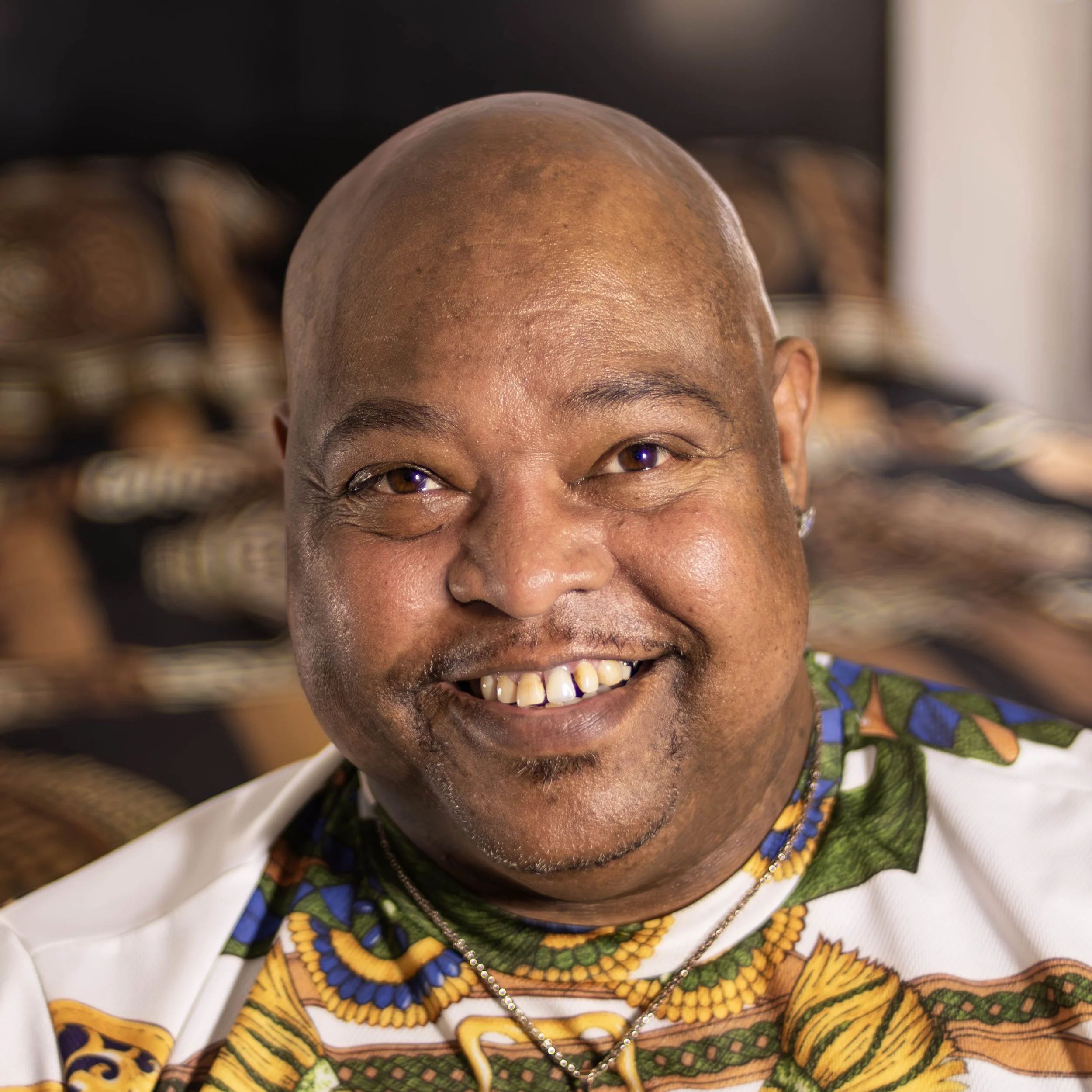
RobbyGee has been photographed multiple times throughout the Portraits of a Pandemic series. As a survivor and thriver living with HIV, RobbyGee has centered his life around providing peer support online, in person, nationally and internationally. He said that one of his greatest concerns continues to be the lack of communication about resources between peers and support agencies.

“I was diagnosed with GRID, now known as HIV, in February of 1983,” RobbyGee said. “At age 17, I was fresh out of 12 foster homes and homeless with no support system besides my faith. Contracting HIV was another devastating blow in my young life, which already felt broken. However, I began to develop strong coping skills. I accepted that my HIV was not going anywhere, and I decided it would not overtake my life. 

I had different plans before I was diagnosed, but this has helped me find my true calling in life. In my 42 years of life with HIV, I've lost over 120 friends and associates. I stopped counting in 1999. The loss was too much.”

In January of 2019, RobbyGee founded a grassroots HIV support group in Akron, called SSOULE Group, which meets monthly. In between meetings, he connects one-on-one with each attendee to offer support, information, and resources. “Nothing can replace the feeling of helping people. Until the day I leave this world, this is what I’ll do. It gives me a sense of purpose.”

After the Stay-at-Home order went into effect, two of RobbyGee’s sons (Andrew & Matthew) moved in with him. Andrew, a licensed CNA, remained consistent as RobbyGee’s caretaker. He is currently a community health worker, home health aid, CPR first aid instructor and is also in nursing school. Matthew had some struggles with mental health and addiction, resulting in a less consistent and more dangerous lifestyle for a large part of the pandemic. RobbyGee would often worry his son was in trouble or in danger. “Matthew is clean and sober now,” RobbyGee said. It took 10 years, it was a lot of work, but he is doing amazing now.”

In August of 2023, RobbyGee and his two sons had the opportunity to move out of their apartment and into a home in North Hill. They had been searching and waiting for a long time, hoping to get into a safer area with more room for the three of them. RobbyGee stated that over the years living in their apartment building, he witnessed 8 dead bodies, but now that he lives in a home in a safer area, he feels very blessed.

"I didn’t think I’d live to see 40, and I can’t believe I made it to 60! God is keeping me because of the work I do. God and me have an understanding that he will let me know when my time is coming—He told me about 5 months ago that it’s coming. I have beat death for so long and I’m not afraid to die."

RobbyGee sees his passion for helping others as a way to honor the memories of all those he loved and lost, with the ultimate goal of us all to living to see the end of the HIV epidemic. While much of RobbyGee’s work with the community has been volunteer-based, he has also been working for the Summit County Health Department for more than six years.

RobbyGee reflected on his overall thoughts about the pandemic. 

“The pandemic was scary because it reminded me of the beginning of AIDs back then, with so many people dying and not knowing how to handle it. I remember when I got COVID. I already had 3 infections, and then I got COVID. I was in the hospital for 3 weeks. My sister had been watching my Facebook though I didn’t know. As soon as I got home, she called me and we talked for 2 hours. Just to hear her voice alone, it was just amazing. I never got to meet my sisters. I don’t know why they chose not to meet me. Them knowing that I was gay and that I had HIV made it that much harder. I was hurt for a very long time and had given up. Now, I am planning to see my sister in Virginia. She knows I’m gay, but she also knows I’m doing God’s work. I just wanna put my arms around her and never let go.”

We don’t just survive today, we thrive today! We are our brother's keeper.”

September, 2020

Maple Valley

Iman by autumn bland

Iman and her newborn son Indigo were first photographed at their home in Cleveland in the summer of 2020. Shortly after, Iman realized that this home was not a safe place, so when Indigo was 3 months old, they moved in with a friend in North Hill. As a single mom with limited resources and no reliable options for childcare, Iman would pick up temporary jobs whenever she could, while still seeking permanent housing for her and her son.

“We stayed in North Hill for a year nine months. After we left North Hill, we were in a shelter for a week, then moved to a different shelter for a couple of months while we were waiting for our paperwork to go through,” Iman said. “The first shelter was a little rough, but the second one was actually kind of great because it was apartment style. You had your own bed and bathroom and then we just had to share a common space with another family, which was just the living room and kitchen. So it wasn't too bad.”

I asked Iman about the process of finding housing, and she explained: “For CMHA Section 8, you have to go to the movers class and then complete a RFTA packet that you and the landlord fill out. It takes about 30 to 45 days to actually be processed, sometimes it can take longer. Once you go through that, they do the inspection and you can sign the contract.”

Iman has gone through the Housing Choice Voucher Program twice for her housing. “The next place, hopefully we can stay for a little bit,” said Iman. “I'm not very keen on the area, it’s just what I could take right now. It's in a red zone, so it's not really cared for, unfortunately.”

For Iman, the pandemic felt like an opportunity to pause and reflect “It really helped me because it was the time of my life where I needed to slow down. Between having Indigo and a lot of stuff going on with my health, it was like a blessing in disguise in some ways, giving me more time to focus on my health and my baby. That's my theme now. I’ve been working with this fibromyalgia specialist and he's helping me understand what I need to do to continue to allow my body to restore some of its energy. I'm taking the time to get healthy and focus on me, because it's been so challenging to maintain work and family life. It’s been recurring themes: listening to my health journey and slowing down and pacing myself.”


July, 2020

Glenville-Cleveland

June 2021

North Hill

Mel by autumn bland

Mel was first photographed in April of 2020. As a freelance set stylist, she went back to work full-time in May. “I basically went right back to work. At the time, I was doing a lot of work for a furniture catalog, you know, capitalism wants to do what capitalism wants to do. We were on a deadline. Work in the still photography world came back so much earlier than in the video side because of the nature of the video crews being bigger. It was interesting to see how the production industry functioned and adapted.

It just felt surreal to be really so non-essential, which is something I’ve always struggled with in my career—that no one really needs what I’m encouraging them to buy with a beautifully styled photograph. But at any rate, it was particularly noticeable in those early days. I was really glad that I was able to work then because, of course, I would not have had any income. On the one hand I felt lucky that I was able to work, but on the other hand it just felt so surreal that while other people who were so much more essential than me weren’t able to work. I felt that was an interesting dichotomy. Ironically, I had my busiest year in many years and it was so different from other people’s experiences. I only had COVID once and it wasn’t severe, but I have had long-term effects from that - fatigue, shortness of breath, elevated heart rate, etc., which has made long production days incredibly exhausting.”

Mel was in Paris just before the shut down in the U.S., which gave her a brief opportunity to see how another country was managing the pandemic. She made it back safely and quickly experienced the full pandemic shutdown. Then, she went back to France in 2021 and got to see COVID testing firsthand. 

“Free COVID testing was available at every drug store and you could buy test kits yourself. When you’re in a country that has universal healthcare, people were much more compliant about mask usage because they had a system that actually functioned for them and protected them. They didn’t have the notion that this was all fake.

I was also adjusting to being a widow and being alone. I had roommates in college, then I got married at 25 and we were married for 35 years. I literally had never lived alone until Len passed in September, 2019. I look at that portrait you took of me and I think of that person learning to be alone for the first time. I see a lot of uncertainty and tentativeness in me at that time.”  

For Mel, the pandemic presented an interesting balance between independence and connectivity. She became more self-reliant, independent, and adventurous. “I think that time taught me to check in with friends and to actively cultivate and encourage the people in my life."

West Akron

April 2020

West Akron

September 2020

Liz by autumn bland

Before the pandemic, Liz Barton was working full-time at the Cummings Center for the History of Psychology and her husband, Mike, was running his own landscaping business. The pair had two young children and were managing to maintain a small farm with a vendor space at Haymaker Farmers’ Market weekly.  After the Stay-at-Home order in March of 2020, the Bartons were all home together, giving them the opportunity to work more on their farm as a family. Mike dialed his small business back and put the majority of his focus on the farm, which is something he had always wanted to do. “2020 was like the impetus of that,” Liz said. “Experiencing a pandemic and realizing that life is about doing the things you wanna do and not just always saying you'll get to it.”

Liz continued her full-time work, switching to a hybrid work schedule. By 2022, they closed the landscaping business, giving Mike the opportunity to have a full-time commitment to Barton Farms and Gardens. “We were already doing the farmers market and had an audience and some pretty loyal customers. Mike loves nothing more than being at home, gardening and farming so he was in his best element. We were all home together, which is what he really loves, too.

I feel that we were lucky that our kids were so young during the shut down, so it didn’t effect them much. Mike was home so childcare wasn't an issue, which was the biggest issue for a lot of people.”

As the farm scaled up, the Bartons were getting more involved with the community. They host an annual plant sale on their farm and had the honor of hosting the Haymaker Harvest Dinner on their property, which is a fundraiser for the farmers market. “It was rewarding because so many people that have been customers for a really long time and were able to come out and experience this farm to table dinner.

As president of Haymaker Farmers’ Market for 11 years, Liz spoke about her experience in that role during the shut down. She reminisced about the camaraderie of the board and volunteers from the market, saying that the market only had to close for one weekend while they came up with a solution to continue operations. “We created a drive-through market at the church where board members would volunteer weekly. People could order in advance or could just drive through the line. If it was available, vendors would put stuff in your trunk.

Something that the pandemic taught people was farmers in the community still had products that the big stores didn’t. A lot of farmers and small farms did well during the pandemic.This is what community is all about. We came together. The pandemic had obviously so many awful elements—lives lost, businesses lost. There's a lot of terrible elements, but there was this community effort to do good things and I think that it inspired people.”

June, 2020

Atwater

July, 2021

Atwater

May, 2025

Atwater

Dave by autumn bland

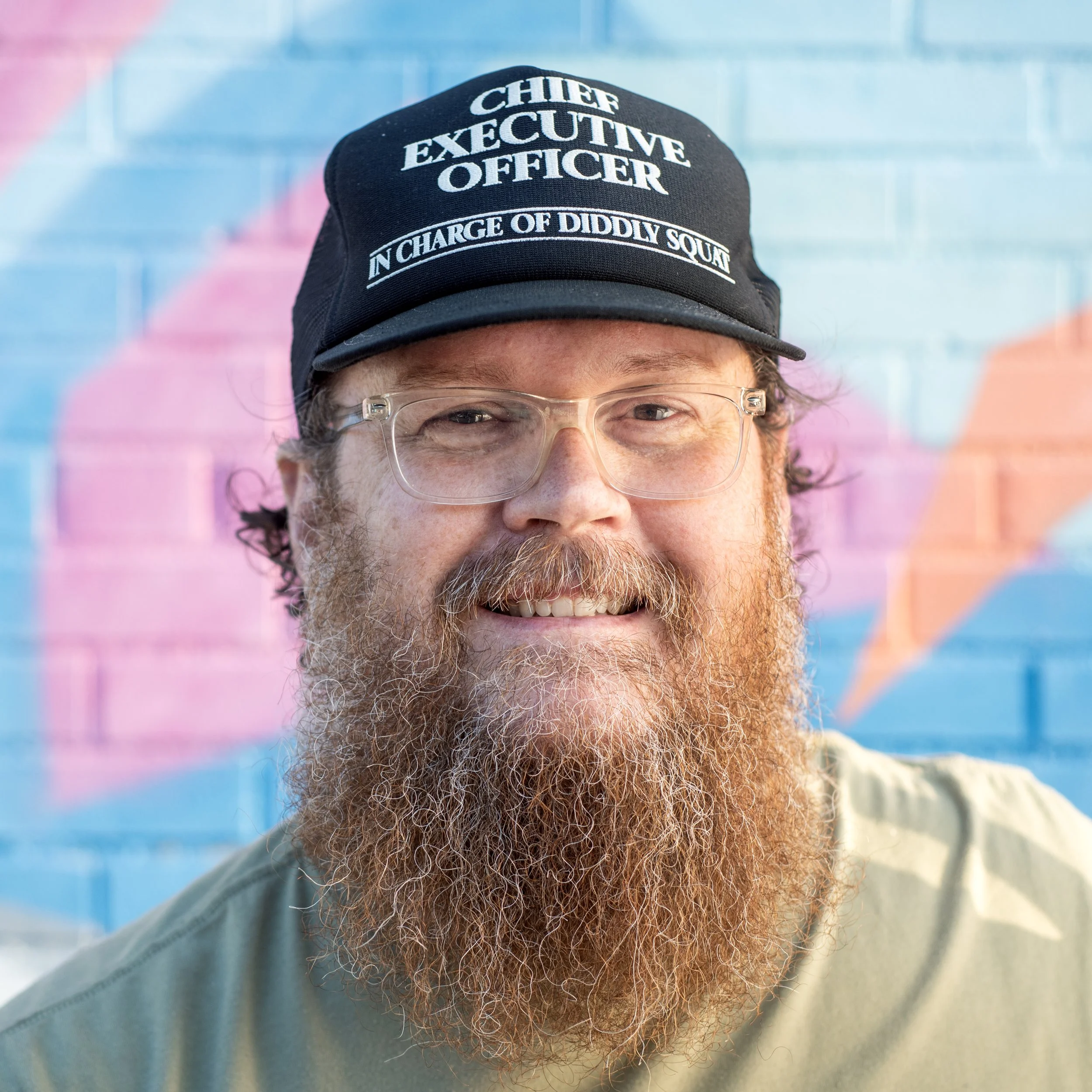
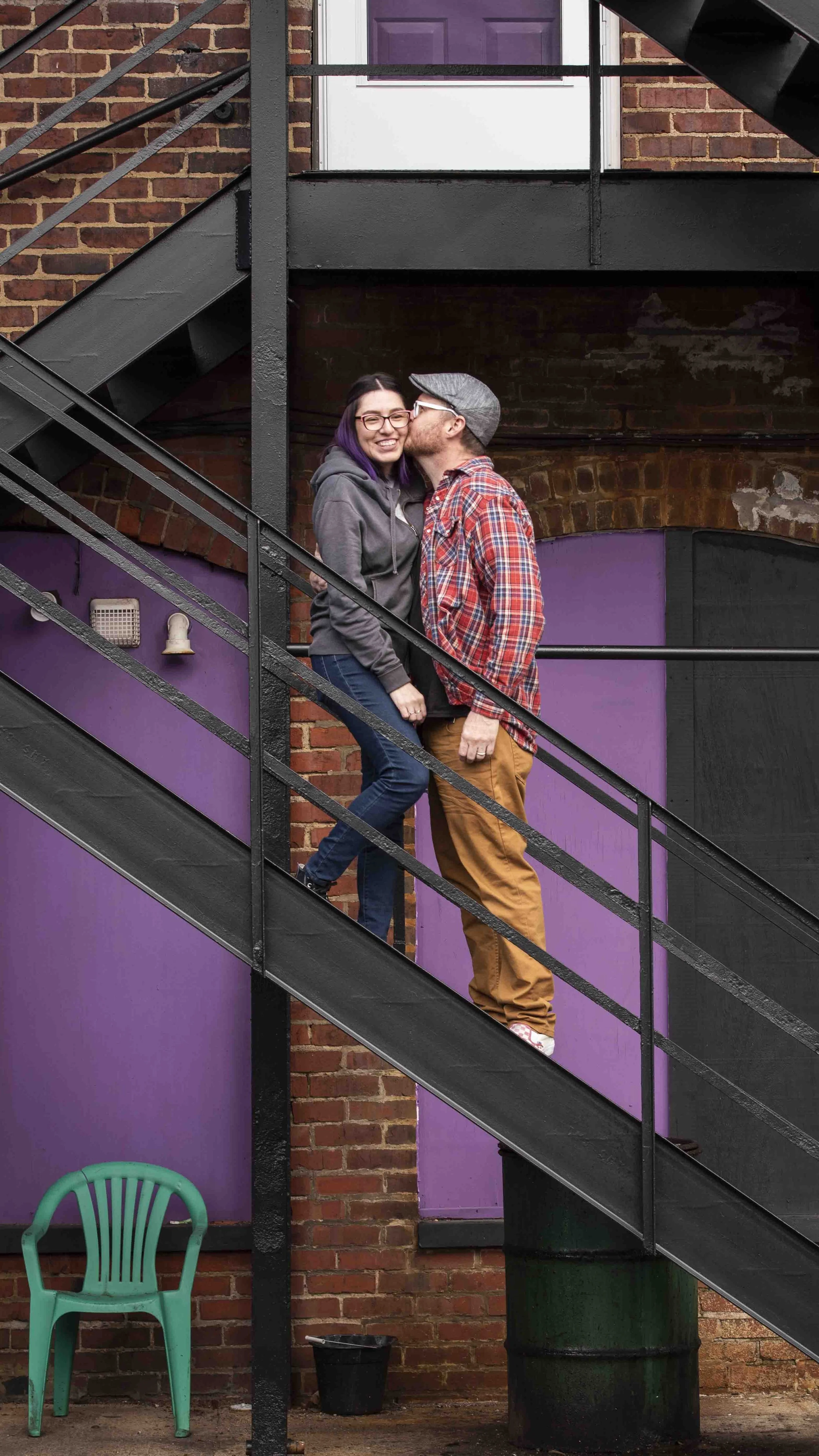
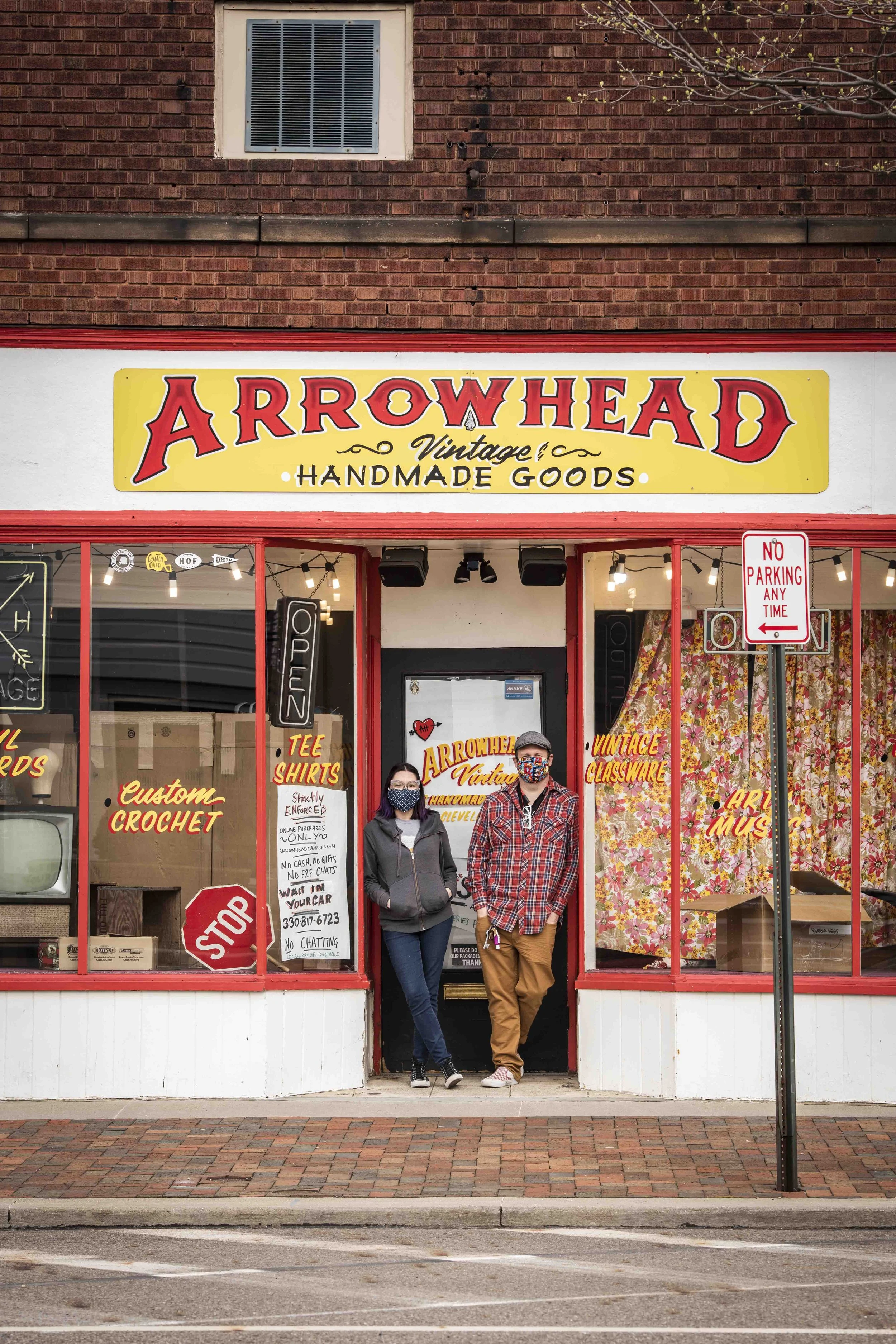
Dave was first photographed with his wife during the Stay-at-Home order. Dave is a professional artist and his wife, Melissa, is a court reporter working remotely for a law firm in Utah. Additionally, they own a vintage shop in Canton called Arrowhead Vintage. When the Stay-at-Home order was lifted and Governor DeWine announced “Responsible Restart”, we followed up with another portrait outside of their store. “So much happened so fast and it was scary in the beginning because no one knew what was going to happen,” said Dave. “There was a lot of uncertainty. I’m on immunosuppressants, so I didn’t know if I was going to die. Now, it’s a matter of long-COVID and I just had a friend die from that. I did end up getting COVID at one point, but didn’t realize that I had it until my wife got it, too. She never left the house, so I knew that she got it from me.”

Initially, they closed the store and started making face masks, which was accounting for all their income. Then, about six months into the pandemic, Dave’s artwork went viral. “We were so afraid that we were going to end up homeless and then ended up having the most successful financial year in our history,” he said. “It was an incredible experience. I was just making art and putting it on Reddit and Instagram. I had some stuff go kind-of viral before but this went wild. I ended up in Newsweek, celebrities started following me, I was sending my art to Italy and France. I was getting 500 orders a day. I turned the store into a space to fulfill all the orders and to use as my studio workspace.”

In 2022, Dave started teaching art at Silo Arts Studio—a work space and gallery in downtown Canton helping to facilitate the advancement of artistic growth and education for adults with disabilities. “I try to work with each student individually. I assess their goals and teach them traditional art skills to meet and surpass those goals,” Dave said. “I also teach them how to sell\ their art at shows."
After the election in 2024, Dave said that his art sales dropped tremendously and he needed to find another way to supplement his income. At the same time, Silo Arts Studio had an opening for student transportation. Dave went through multiple training sessions to receive all certificates necessary to fulfill the position. “Most of the training and certifications are for helping adults with disabilities,” Dave said. “Medical training for seizures, wound care, distribution of prescriptions, and more. There are about 30 people in the program.” Dave is now both teaching and driving for Silo.

“I'm trying to recall it [the pandemic] to write a book, there’s a lot of times where it's all kind of blurry. It’s only been four and a half years since the shut down, but it seems like an eternity,” he said. A couple of his takeaways from the pandemic are: “Nothing is set. Everything can change in the blink of an eye. Change doesn’t have to be bad. I went into the pandemic completely terrified and it turned out to be one of the high points of my life.”

Downtown Canton

March 2020

Downtown Canton

May 2020

Maureen by autumn bland

In March of 2020, Maureen was photographed with her husband Jeremiah and their son Julian. Maureen was a teacher, just beginning virtual teaching while Jeremiah owned a piercing shop, Good Life, which had to be temporarily closed due to COVID mandates. 

“I was having serious anxiety and panic about teaching,” Maureen said. “By early March I stopped working for the most part because I was debilitated by anxiety and depression, which turned out to be a direct result of burnout. I remember thinking, “I don't know what's wrong with me. I can't function. I can't get out of bed. I'm so anxious. I'm having panic attacks." I'd never experienced any of that before.” Maureen decided to take work off through spring break, when suddenly the Stay at Home order was put into effect. 

“The timing was great. Jeremiah decided since he was already laying everybody off and figuring out what the new world looked like, he'd take care of Julian while I taught upstairs,” she said. “It was just like this symbiosis that worked out with our schedules. Then the school year ended, and I was able to take care of Julian so Jeremiah could reopen the shop.

I felt like the universe was conspiring to help me and I don't want that to sound insensitive because it was also a really scary time for the whole world. People died and people suffered, but it came at this moment where I didn’t know what was wrong with me and I needed time to figure it out. I needed my grind to slow down, and that's what I got.

I decided not to go back to teaching and I felt instant relief from my anxiety and depression. I felt this freedom to explore things that I always was interested in but could never do because I was teaching 60 to 70 hours a week and trying to be a good mom and manage all of these things. I started being able to dream again.

That summer I decided to go on a journey to become a gestational surrogate for two men who felt like family from the first time we met,” said Maureen. She and Jeremiah met Kevin and Eric and connected immediately. Soon after, they began their journey together.

In January of 2021, they transferred one embryo. At their 7-week scan, Maureen, Eric and Kevin were shocked to learn the embryo split twice and that they would be expecting triplets!

Maureen gave birth to three healthy triplet girls in September of 2021. Since then, Maureen and her family have been a regular part of Kevin, Eric, and the girls' lives. 

"My mom loves them so much so she and Jeremiah both pay visits. Julian comes with me and he thinks of the girls as his cousins. We get to see them quite a bit.

I couldn't have done this without the support of my family and these guys who wanted to take this journey with me. It’s really cool that even though this is my story, all these people were such important characters in it.”

I really do credit Covid for freeing up my life and giving me the space to dream of new things. I can do more with this slower life, where I can say yes to things again.” 

TMB_1998_IG.jpg
TMB_2148_IG.jpg
TMB_2197.jpg
TMB_2060rt.jpg

Josy by autumn bland

Many people talk about the pandemic as taking time to slow down, to pause, to stay at home. This was not the case for Josy. As an actor, director, playwright, community builder, and arts administrator, Josy had a busy experience throughout the pandemic. 

Pre-pandemic and during a large portion of 2020-2021, Josy was working on her project titled, “HOME”, for which she was awarded a residency through Akron Soul Train. 

2021 was a stacked year for Josy. She continued her progress on “HOME”, she also was a Dramaturg and Playwright for al otro lado del rio, (Across the River) with the New World Performance Laboratory. This was adapted to meet COVID-19 safety protocols by making the piece a one-person show with limited audience seating and partitions between the seating.

In the summer of 2021, she became one of four co-leaders of CATAC (Center for Applied Theatre and Active Culture). Their mission is to embolden innovative performances and artist-centered events that nurture social change and foster community. That fall, Josy was named Associate Producer for the BorderLight Theatre Festival which takes place in downtown Cleveland. This multi-day festival hosts dozens of artists throughout a variety of spaces, showcasing diverse performances. Josy continued this work through 2025.

Josy’s hard work did not go unnoticed as she was awarded Woman of the Year in the category of Creativity by the Summit Historical Society in 2021. Additionally, Josy was named one of the Great Akron Chamber of Commerce “30 for the Future” and received the Summit Artspace Arts Alive award in 2022. 

Josy has a passion for activating spaces that might not otherwise be activated, helping people change the way they view their lived environment and experience places in a new way. She’s done this through multiple performances beyond the “HOME” project (which premiered inside of a West Hill home). Her performance “FREIGHT" activated a freight elevator, and "if a tree falls," was an outdoor movement piece about Black Joy that incorporated a tree into the performance. 

“I don’t understand how people process anything without art or movement, even if it's just physical processing. I use a lot of my work to stay connected to people, even though I am introverted. I use my art as a form of processing and connection."

Josy’s growth expanded to include theatre lighting. In 2023 she received a Creative Investment grant through ArtsNow and the Ian Patrick Schwarber Foundation to learn the ETC lighting program for theatre. [then completed the FOCUS Apprenticeship through Dobama Theatre, where she was paired with lighting designers and theaters in Northeast Ohio to continue to hone her skills. This lighting interest led to her first lighting design project in 2024 for “Nine Lives”— a multimedia jazz performance performance created by Chris Coles. With a continued strong interest in lighting design, Josy is furthering her education in architectural lighting design to receive her Masters Degree.

“The world is noisy and so much is happening,” Josy said. “It's sometimes hard to know what to do. To be an artist gives you a task in the resistance whether that be showing Black Joy or questioning human evolution, it gives you an action. A thing to do. Posting isn’t enough for me. Going to protests isn’t enough for me. What is the thing I should be doing? I think art is the thing.”

TB3_8522ig.jpg

March, 2020

West Hill